
Medical Custom Machined Parts: Materials, Documentation, and Tolerance Expectations That Survive Audit
Custom machined parts in the medical world are not one-off curiosities — they are the beginning of a documented device. The instrument handle, the implant driver, the valve component, the fixture for a surgical system: each one starts as a drawing, gets machined in a quantity as small as one, and ends up inside a design-history file that a regulator can ask to see years later. That changes what "custom" means. The material has to arrive in a state you can name — an alloy, a temper, a certified lot — the tolerance has to be held by a process with a measurement behind it, and the documentation has to be produced per order, not reconstructed at the end. This guide sets those three expectations on medical custom machined parts: which materials belong in a device program, what tolerance is realistic while the design is still moving, and which records should ship with every part so the device maker's evidence trail survives audit.
Why does a medical custom part carry a heavier expectation burden than an industrial one?
In most industries a custom machined part is validated, used, and retired without a second thought. In the medical world the same part starts a paper trail that outlives it. Device programs assemble design-history files that regulators can request years after the parts were made, and that file is built from records gathered while the work happened, not from memories reconstructed when an auditor asks. A shop that ships a custom medical part with its material certificate, its incoming verification, and its inspection values hands the device maker real building blocks for that file. A shop that ships bare metal hands over geometry and nothing else, leaving the device maker to hunt down the material and process facts later, when the trail has already gone cold.
The small-quantity nature of custom work makes this sharper, not softer. A custom medical order may be a single piece — the floor accepts orders starting at one — yet the documentation burden stays the same regardless of the count. A lone prototype that shows up without its material state and its measured values is only half a deliverable: the machining finished on time, but the evidence the device file needs did not travel with it and now has to be chased down. The working rule is plain: on a medical order the records are part of the product, and the supplier should name what will ship with the parts before the order is confirmed, not after an audit question surfaces.
Which materials should a medical custom part program actually run?
Medical device parts are drawn in a short list of workhorse materials, and each one arrives with a condition that has to be verified and preserved. On the metal side, 316 stainless is the default for instrument components that meet blood or tissue or that must survive sterilization and cleaning — its molybdenum resists the chlorides in saline and aggressive cleaning agents, which is why it appears in surgical instruments and implant drivers. The 303 grade covers non-contact instrument hardware where free machining matters more than maximum corrosion resistance. Titanium — typically the 6Al-4V grade — appears where weight, strength, and biocompatibility meet, in implantable and long-term-contact components. On the polymer side, PEEK is the engineering plastic of choice for structural and single-use device parts that need strength, sterilizability, and radiolucency; POM (acetal) and nylon cover wear components, bushings, and insulators.
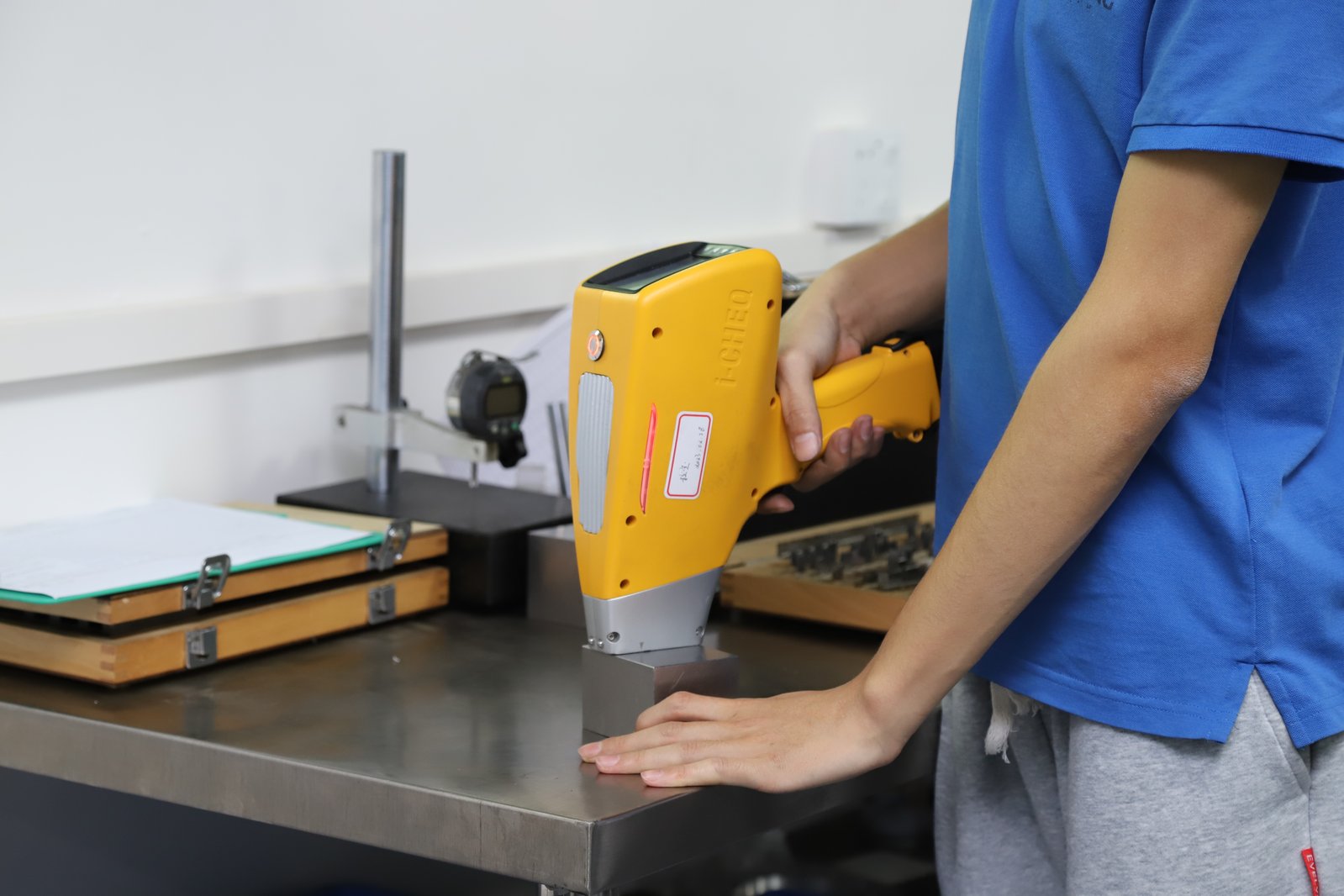
The prototype question is not which family a device will eventually use, that is the design history's decision. It is whether the supplier can hold the grade's state through a fast, low-volume custom order. Each of these materials arrives with a condition that must be verified: 316 has to be the molybdenum-bearing grade, not a look-alike that machines faster; titanium has to be the certified alloy; PEEK has to be the medical grade, not a general-purpose substitute. A shop that verifies incoming metal by XRF against the mill certificate, lot by lot — the incoming check the quality page describes — can name the state of the material it is cutting. One that cannot should not be quoting medical custom parts, because the state it cannot name is the state the device file will not support.
Which tolerance expectations are realistic on a medical custom part?
Medical drawings carry tight callouts because the parts meet patients, and the failure cost is high. On a custom part, the discipline is to hold the tolerance on the features that validate the design — the mating diameter, the sealing face, the interface that joins to another instrument — and let the rest ride on a general standard while the design is still iterating. This floor holds ±0.003 mm on milled and turned features and ±0.002 mm on precision-ground surfaces, with key characteristics verified at Ppk ≥ 1.67 initial. Those are real bands, but on a custom medical part the realistic question is which features need them and which do not, because a prototype exists to answer design questions, not to burn schedule on features that will move next revision.
The tolerance expectation has to be set against the process that will hold it in production. A custom part that validates a tight mating diameter with a CMM report tells the program the geometry is sound and the process can hold the callout. A part that ships without the measurement tells the program nothing it can carry into its design-history file. The medical buyer's rule mirrors the material rule: tolerance is only a fact when a measurement travels with it. On a custom part, that means naming the two or three functional features on the RFQ and asking for the measured values against those callouts, not a full dimensional report on every feature, which on a one-off can cost more than the part.
Which records should travel with every medical custom part order?
Medical programs run on documented evidence, and the habit has to begin with the first custom piece. Every order should carry three records, and each one corresponds to a risk the device program will meet further down the line. The first is the material record: the mill certificate for the lot, with the incoming verification that the stock matches it, so the part's grade and condition are named and verifiable. The second is the inspection record: the measured values for the functional features against the drawing, so the tolerance claim has a number behind it. The third is the process record: which machine, which program, which operator, and which date produced the part, so a question about any order resolves to a specific event rather than a memory.
These three records are cheap on a one-off and expensive to reconstruct later. A device that changes hands between prototype and production without its records forces the second shop to re-derive everything the first one learned — the material state, the process that held the tolerance, the features that worked. A program that accumulates the records from the first custom order forward hands production a running start. On medical work, this is not an administrative nicety; it is the difference between a device file that closes cleanly and one that stalls at audit. The documentation expectation belongs in the RFQ in the same sentence as the material: "ship the material certificate, the incoming verification, and the measured values for the functional features with every order."
How do you keep the evidence chain intact from a custom part to a production device?
The custom-to-production hand-off is where medical evidence chains either stay intact or quietly break. When the custom part and the production run happen on the same floor, the material lots, the programs, and the measurement system carry over, and the ramp is a matter of adding quantity to a validated process. When the custom part comes from one supplier and production from another, the second shop re-verifies material, re-programs the part, and rebuilds the evidence from scratch, and every step is a place where the alloy or the process can drift from what the custom part proved.
The device maker's defense is to specify the chain before the hand-off. Name the grade and condition on every order, not just the first. Ask that the production lot be verified against the same standard as the custom part — XRF against the mill certificate at receiving, measured values against the same drawing callouts, capability at Ppk ≥ 1.67 initial on the same key characteristics. And keep the records moving with the parts rather than in a folder that stays behind, following the traceability logic the main custom-parts guide ties to every order from raw stock to shipment. On medical work, traceability is not a property of one part; it is a property of the whole chain from the first custom piece to the last production batch, and the chain is only as strong as the earliest links.
How do you write medical expectations into a custom machining RFQ?
A vague RFQ produces a vague part, and on medical work vagueness is expensive. A short list turns the expectations above into an order a supplier can quote against and a device maker can audit:
- Name the material grade and condition. "316 stainless" or "PEEK medical grade," not "stainless" or "plastic." The named state is what the supplier verifies and what the device file records.
- Call out the functional features and their tolerances. Two or three dimensions with a measurement requirement beat a drawing where every feature is critical and none is measured with attention.
- Name the documents that ship with the part. Material certificate, incoming verification, measured values for the called-out features — state them in the RFQ so they are priced and scheduled, not added at the end.
- State the quantity and the validation stage. Custom machining runs from one piece up; knowing whether the order is a first article, a pilot, or a production batch lets the supplier schedule the records with the machining.
- Ask which standard governs verification. Ppk ≥ 1.67 at the initial study on key characteristics and Cpk ≥ 1.33 on general characteristics. Capability is reported per characteristic: every report names the feature, its tolerance band, the sample size, the sigma method, and the study window., measured on the same instruments that will verify production, so the custom part proves the process, not just the part.
None of this requires the supplier to hold a medical certification to machine a custom device part. What it requires is documentation discipline — the same incoming verification, the same measurement, the same lot records that a capable precision shop runs on every order. The RFQ is where the device maker states that the discipline is expected, and the custom part is where the supplier proves it can deliver it.
Frequently Asked Questions
Which materials should a medical custom machined part be made from?
Run the production grade so the custom part validates what the device will use: 316 stainless for instrument components that meet blood or tissue or face sterilization, 303 for non-contact hardware, titanium 6Al-4V for implant-adjacent and long-term-contact parts, and PEEK or POM for polymer components. The state has to be named and verifiable — grade, condition, and certified lot.
What tolerance can a medical custom part realistically hold?
This floor holds ±0.003 mm on milled and turned features and ±0.002 mm on precision-ground surfaces, with key characteristics at Ppk ≥ 1.67 initial. On a custom part, hold the tight callouts on the functional features that validate the design and let the rest ride on a general standard while the design is still moving.
What documentation should ship with every medical custom part order?
Three records: the material certificate with the incoming verification that the lot matches it, the measured values for the functional features against the drawing, and the process record naming machine, program, operator, and date. Each maps to a risk the device maker will face later, and all three are cheap per order and expensive to reconstruct.
Does a medical custom part need a certified medical supplier?
For a machined custom part, what matters most is documentation discipline, not a certificate on the wall. The material verification, the measurement, and the lot records are the same checks a capable precision shop runs on every order. As the device moves toward production, the relevant quality standards apply, but the custom part proves the shop can produce the evidence.
Can I prototype a medical device part in China and still meet traceability?
Yes, when the supplier verifies incoming material by XRF against the mill certificate, lot by lot, and ships the records with the parts. Traceability is a property of the documentation chain, not of geography. The named grade, the verified lot, and the inspection record travel with the part regardless of where it was machined.
How do I write the expectations into the RFQ?
Name the grade and condition, call out the two or three functional features with their tolerances, list the documents that must ship, state the quantity and validation stage, and ask which standard governs verification. Each line removes a variable the schedule and the evidence chain would otherwise absorb.
Which quality systems back medical-grade work at this manufacturer?
The shop operates under ISO 9001:2015 (certificate 116024/A/0001/UK/En), IATF 16949:2016 (product design excluded) (131941/A/0001/SM/En), and ISO 14001:2015 (116024/B/0001/UK/En), and verifies incoming material by XRF against the mill certificate before stock reaches the machines. The material record and the inspection report ship with the parts rather than staying in a brochure.
Machining a medical custom part, and need the evidence to carry into your device file?
Send the drawing with the material grade, the functional features, and the documentation list to [email protected] or call +86 13126536955. You will get the material verification clause, the tolerance plan, and the records that will ship with each order — written into the quote before you commit.