
Custom Machining Parts Factory
The quality system is third-party audited against three standards, with certificate numbers you can verify rather than logos you have to trust.
| Standard | Certificate number | Scope |
|---|---|---|
| ISO 9001:2015 | 116024/A/0001/UK/En | Machining of metal parts |
| IATF 16949:2016 | 131941/A/0001/SM/En | Manufacture of CNC metal machining parts (excludes product design, Clause 8.3) |
| ISO 14001:2015 | 116024/B/0001/UK/En | Environmental management related to machining of metal parts |
Honest scope note: IATF 16949 excludes product design under Clause 8.3. We are a build-to-print manufacturer — if your program needs us to own design responsibility, say so up front and we will scope it accordingly.
How does the factory's equipment support the full material range?
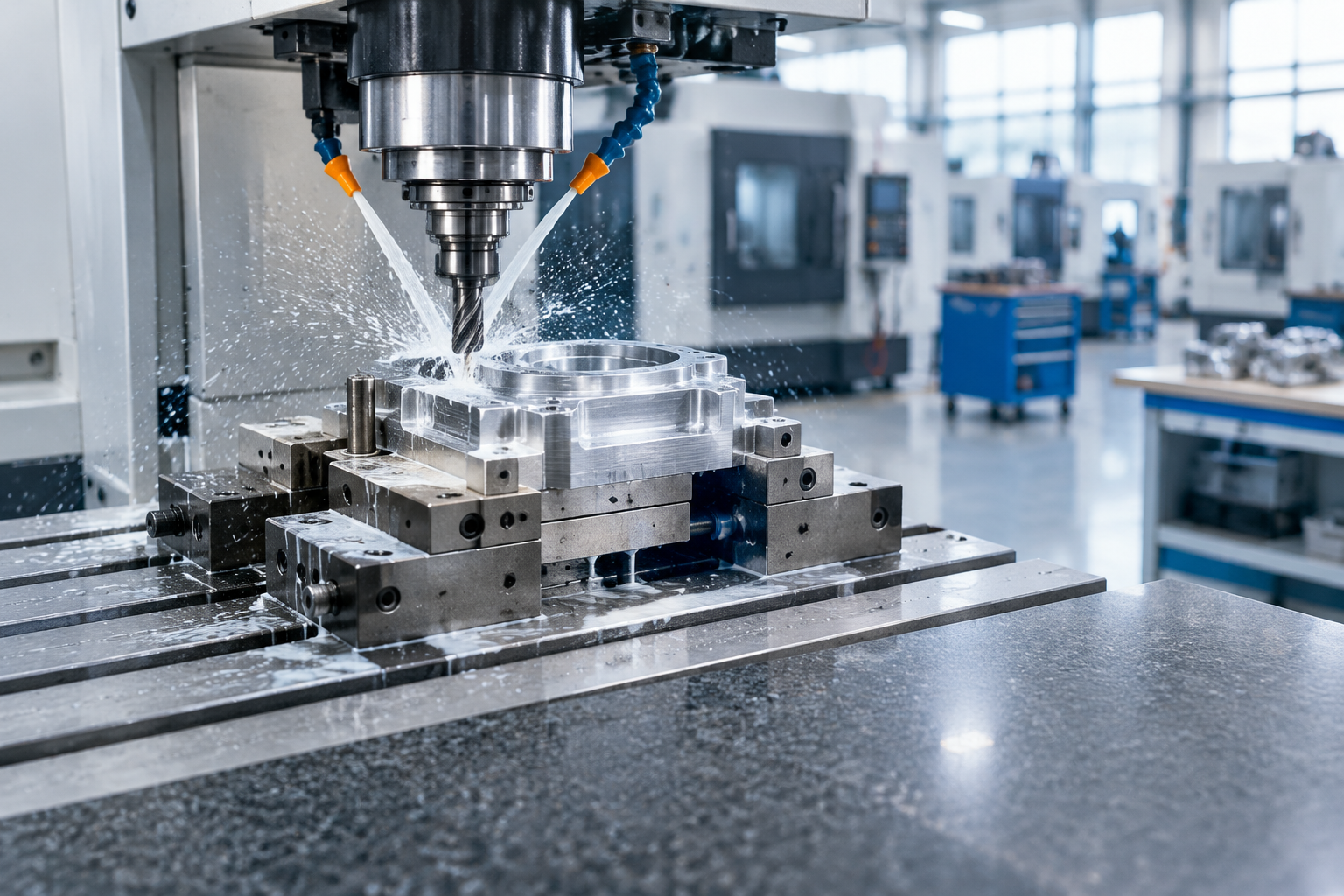
The material range — aluminum, steel, stainless steel, brass, copper, titanium, magnesium, and engineering plastics — is supported by more than just the machining centers. Incoming stock is verified by XRF against its mill certificate. Surface finishing spans standard and hard anodizing, zinc, nickel, silver, gold, and chrome plating, powder coating, painting, brushing, and mirror polishing. Heat treatment spans vacuum, bright, carburizing, nitriding, and stress-relief aging, with in-house ovens reaching 500 °C.
The finishing and heat-treatment equipment closes the loop that material selection opens. If you pick steel for a wear part, you also need a path to carburizing or nitriding; if you pick aluminum for a housing, you also need anodizing. When those steps are available on-site or through a managed partner, the material decision is an executable choice rather than a catalog entry that stops at the machining step.
The honest boundary is worth stating: titanium stress relief above 500 °C is outsourced to a qualified partner, because some titanium grades require temperatures our in-house ovens do not reach. Stating that boundary up front — rather than discovering it mid-job — is the difference between a quoted lead time and a real one.
How is the factory organized for quality and traceability?
The factory runs a MES/ERP-integrated system that records, on every lot: raw material source and usage, process parameters, machine data, production batch, machining time, operator, and inspection results. That means a part can be traced back to its material and its process in minutes, not days — the discipline that automotive and regulated buyers require, and that every buyer benefits from when something goes wrong.
Inspection runs on the same class of equipment a buyer would use to audit us: two Hexagon GLOBAL S CMMs, vision measuring machines, a gear measuring center, a KEYENCE laser microscope, a SURFCOM profilometer, a micro-Vickers hardness tester, an XRF spectrometer, a Fischer coating gauge, and salt spray and tensile testers. SPC control charts run on key characteristics, with a measured example of Ppk ≥ 1.67 at the initial study on key characteristics on a length feature.
Read the tolerance band before you read the index. Cpk is a ratio of the tolerance band to the process spread, not an absolute measure of accuracy. The figure above was recorded on a length characteristic with a 0.4 mm band (76.1–76.5 mm) — wide by design. Hold the same process spread against a ±0.005 mm feature and it fails outright. Ask for the band, the subgroup count and the sampling window on every capability number a supplier quotes.
What should you check before choosing this factory?
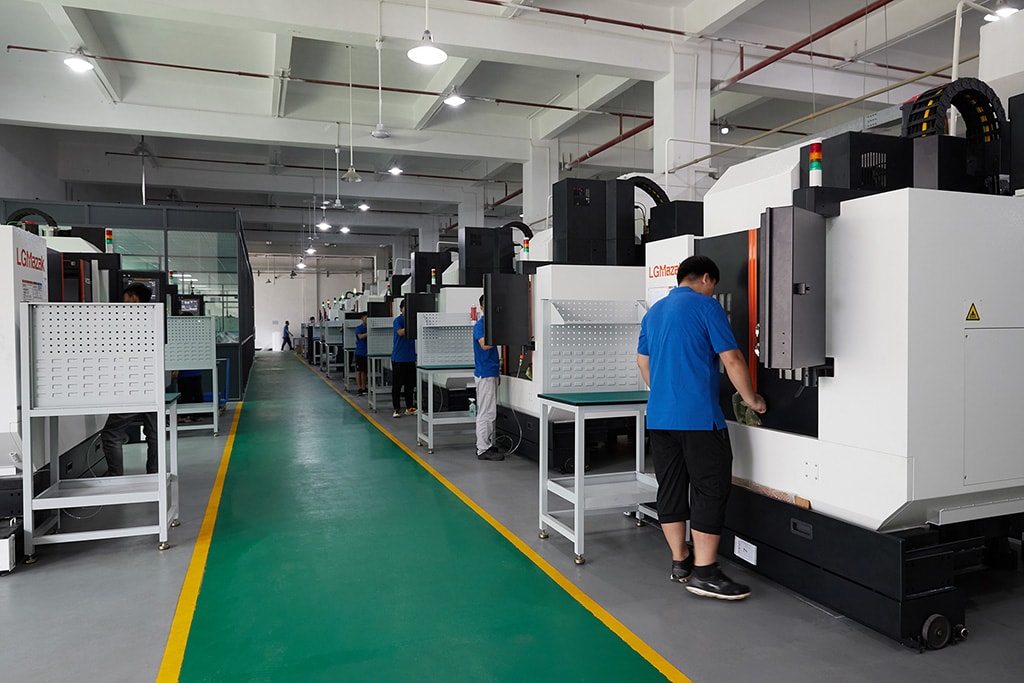
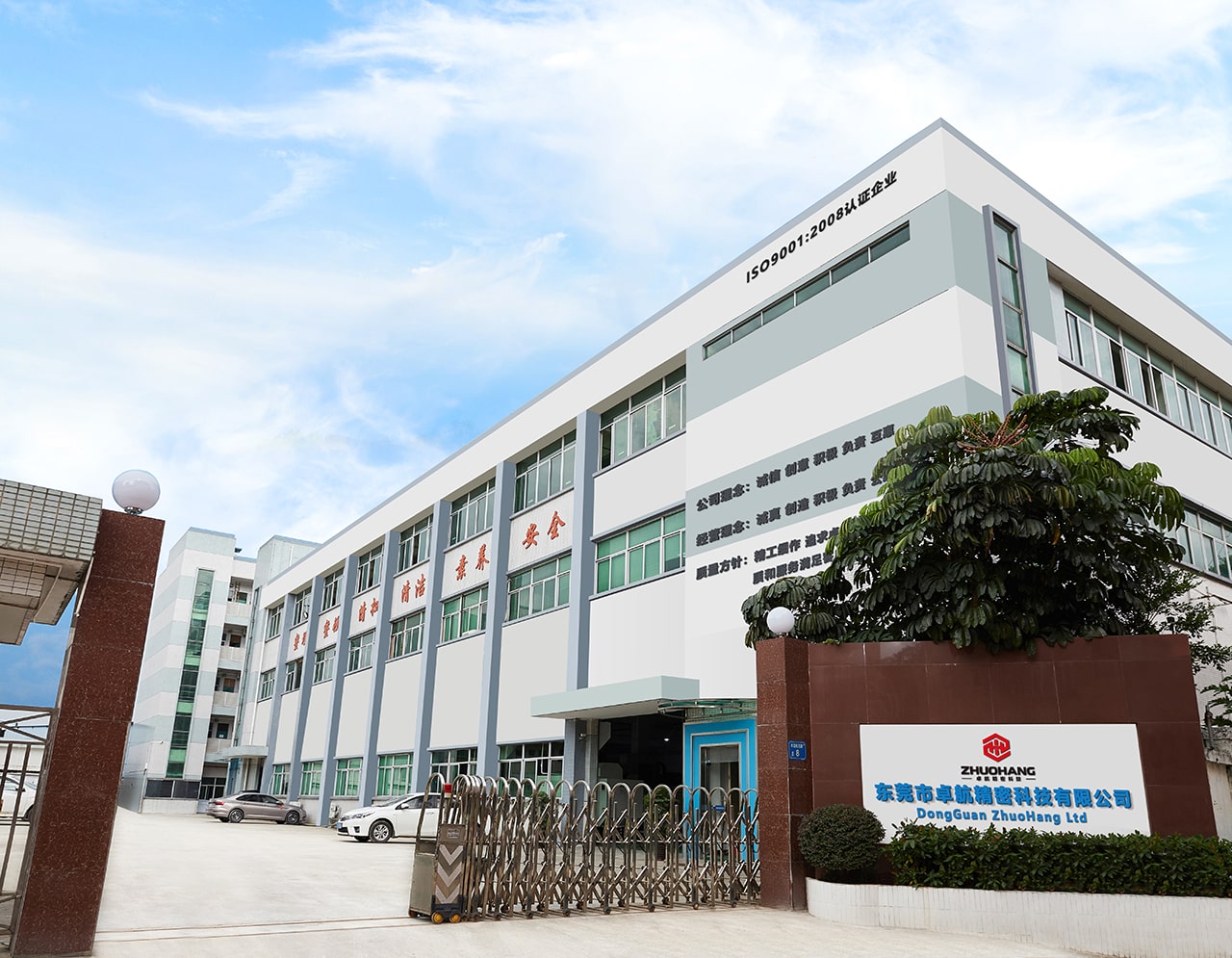
Whether you choose this factory or another, run the same checks, and hold us to them in writing. The checks below separate a manufacturer from a trading desk, and they take minutes.
- Verify the certificate numbers with the registrar — 116024/A/0001/UK/En, 131941/A/0001/SM/En, 116024/B/0001/UK/En.
- Ask who owns the CMMs. A factory that runs its own measurement reacts the same day a dimension drifts.
- Ask how material is verified. XRF at the door, or trust?
- Walk the floor. The machine list should match the machines — you are welcome to audit in person.
- Ask for a real SPC chart from a real job, not a template.
How does the factory help with material and finish selection?
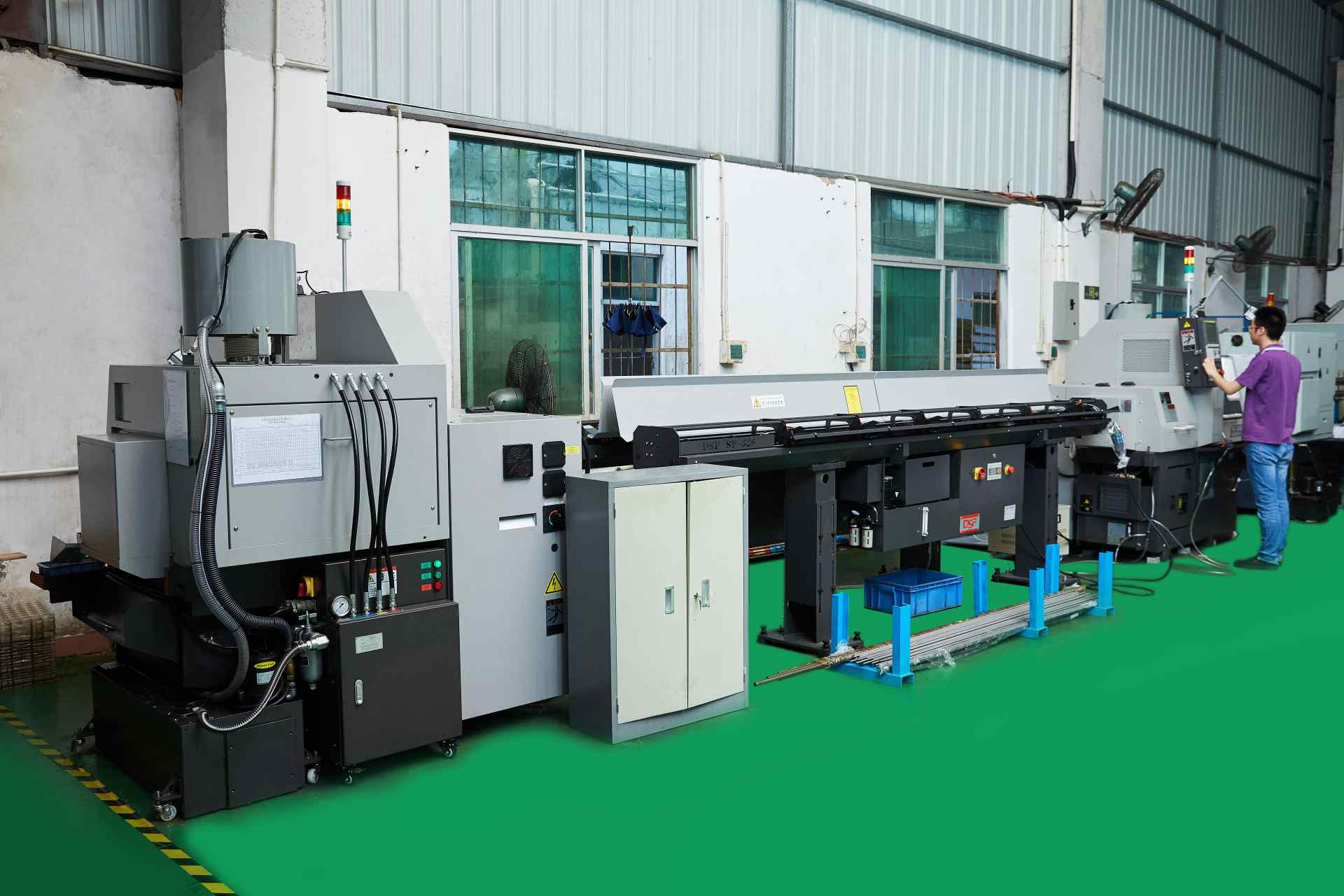
The factory's real value in a material selection conversation is that it has already run the range. When a drawing arrives, the team reads it the way the material decision demands — what load, what environment, what it touches — and recommends accordingly, with the process and the finish following from the material. If the drawing calls out an alloy that is mismatched to the environment, or a tolerance the material will not hold, you hear it before cutting starts, not after the parts ship.
That is the through-line of this site: the material decision is the lever that moves everything downstream. A factory that has run aluminum, steel, stainless, brass, copper, and titanium for nearly two decades is a factory that can tell you, honestly, which one your part actually needs.
What does the production flow look like from raw stock to shipment?
If you understand the flow, you understand the lead time. On our floor the path is the same whether the part is a single prototype or a production batch: incoming stock is XRF-checked against the mill certificate, then cut, machined, deburred, finished, inspected, and packed. Because the steps share one roof, the part moves through them without leaving the building between operations.
| Stage | What happens | What it protects |
|---|---|---|
| Incoming inspection | XRF check against the mill certificate | Material identity before any cutting |
| Machining | Milling, turning, mill-turn, or grinding to the drawing | Geometry and tolerance |
| Finishing | Anodizing, plating, coating, or heat treatment as specified | Surface and mechanical properties |
| Inspection | CMM and finish checks on critical dimensions | The part matches the drawing |
| Packing | Documentation travels with the parts | Traceability to the door |
The flow is the same discipline IATF 16949 audits look for, and it runs on every job, not just automotive ones. Each stage leaves a record, so a part can be traced back to its material and its process in minutes rather than days.
How does the Dongguan location help a material decision?
Being in Hengli Town, Dongguan matters for one practical reason: it sits inside one of the densest machining and materials hubs in China. Raw stock for a wide range — aluminum, steel, stainless, brass, copper, and titanium — is available locally, and finishing partners are nearby. That geography means a material decision made here can actually be executed here, rather than waiting on a long procurement chain for a rare grade.
The same density shortens the feedback loop on quality. When a specialty surface treatment or an outsourced step is needed, the partner is close enough that the handoff is measured in hours, not days. That is not a marketing point; it is how a quoted lead time stays honest when a job has an unusual step in it.
How does the factory organize capacity and scheduling?
Capacity is not a single number; it is a mix of machines matched to the material range. The floor runs 3-axis (50+), 4-axis (20+), and 5-axis (20+) milling centers, 25+ CNC lathes, mill-turn centers, and 7+ grinders, so the right process for an alloy is already available rather than improvised or subcontracted.
Scheduling follows the process chain, not a wish. A part's lead time is the sum of its steps — cutting, finishing, heat treatment, inspection — and each step has its own dwell time. When the finish and the heat treatment are known up front, they get scheduled in parallel with machining; when they are discovered at the end, the date slips. That is the difference between a quoted lead time and a real one, and it is the same discipline that keeps the tiers — roughly 3, 7, or 30 days — honest.
What this shop actually runs
Capability evidence should come as specifics, not slogans. Behind this guide is a 6,800 m2 plant in Dongguan, China running 100+ CNC machines with 100+ staff. The machine list by category:
- 5-axis machining centres (10+) - Mazak VARIAXIS I-600 (510/910/510 mm travel, 12,000 rpm, 22 kW, 71.6 N·m, 30-tool BT40) and Mazak INTEGREX I-250H S (B-axis 0.0001°, 24 kW, 124 N·m, 38-tool HSK-A63). Built for compound-angle parts, single-setup multi-face prismatic work, and aerospace fittings where datum transfer loss is unacceptable.
- 3-axis / 4-axis machining centres (50+) - Brother SPEEDIO S500Z2N / S700Z2N (10,000 rpm, 14/21-tool ATC, 0.7 s tool-to-tool, Z-axis 2.2 G) and Mazak VCE-430A L / VCE-570C L (10,000 rpm, 118 N·m, 24-tool ATC). Built for prismatic parts, plates, brackets, housings.
- Swiss-type turning centres (10+) - Citizen Cincom A20-3F7 (Φ20 mm, 10,000 rpm), TSUGAMI B0206-III / B0205-III (Φ20 mm, 0.1 µm), STAR SR-32JII / SR-32J Type N (Φ32 mm, 8,000 rpm). Built for long, slender rotational parts at ±0.002 mm.
- CNC turning centres (20+) - HEADMAN T70M/1250 (720 mm swing, 117 mm bore, 3,000 rpm, BMT75 12-station turret). Built for shafts, bushings, flanges up to ±0.002 mm.
- Wire EDM (5+) - Sodick AQ535L (550/350/300 mm travel, ±20° taper, 800 kg workpiece). Built for hardened tool steel, internal splines, sharp internal corners that milling cannot reach.
- Inspection: Hexagon CMM + 20+ gauges - Hexagon CMM for coordinate measurement, plus vision system, profilometer, hardness tester, coating thickness gauge, XRF for material verification. The 10:1 rule (gauge 10x more accurate than the band) is applied to every feature.
- Machine highlights - VARIAXIS I-600: one-setup multi-face 5-axis + MAZA-CHECK auto-calibration; INTEGREX I-250H S: DONE-IN-ONE mill-turn, B-axis 0.0001° + Ai thermal shield; SPEEDIO S500Z2N / S700Z2N: Z-axis 2.2 G + 0.7 s ATC; Swiss-type: guide-bush switchable + 0.1 µm resolution.
Tolerance: ±0.003 mm CNC milling / ±0.002 mm CNC turning / ±0.002 mm grinding and wire EDM. Capability: Ppk >= 1.67 initial on key characteristics, Cpk >= 1.33 ongoing.
Certificates: ISO 9001:2015 (116024/A/0001/UK/En), IATF 16949:2016 (131941/A/0001/SM/En, with design clause 8.3 excluded, stated openly) and ISO 14001:2015 (116024/B/0001/UK/En), issued to Dongguan Zhuohang Ltd, registration 91441900MA4UWT6X39, founded 2005.
Where we ship: Austria, Belgium, the Czech Republic, Denmark, France, Germany, Greece, Hungary, Ireland, Italy, the Netherlands, Spain, Sweden and the United Kingdom in Europe; Brazil, Canada, Mexico and the United States in the Americas; China, Israel, Japan, Singapore and Sri Lanka in Asia; Australia and New Zealand in Oceania; and South Africa in Africa — plus other countries and regions worldwide, shipped from our base in Dongguan, China.
Contact: Felipe Iglesias, [email protected], +86 13126536955.
Ready to work with a factory that owns its machines and its material range?
Send your drawing to [email protected] or call +86 13126536955 for a material and finish recommendation plus a quote.
Frequently Asked Questions
Where is your factory located?
Our factory is at No. 8, Shuibian Songyuan Road, Hengli Town, Dongguan, Guangdong, China 523470. The facility covers 6,800 m² in Hengli Town, Dongguan, and you are welcome to visit or audit the floor.
When was the company founded?
The company was founded in 2005. Since then it has grown from a small machining shop into a 6,800 m² facility with 100+ staff and 100+ production machines serving automotive, robotics, electronics, medical, and automation customers.
How many machines do you have?
100+ production machines: 3-axis (50+), 4-axis (20+), and 5-axis (20+) milling centers, 25+ CNC lathes, and 7+ grinders, plus 20+ inspection instruments including Hexagon CMMs and an XRF spectrometer.
Are you a manufacturer or a trading company?
We are a manufacturer. We own and run the machines on a 6,800 m² floor in Dongguan, machine parts in-house from raw material to final inspection, and you can audit the floor in person before you place an order.
Can I visit or audit the factory?
Yes. The plant is at No. 8, Shuibian Songyuan Road, Hengli Town, Dongguan, Guangdong, China 523470. Visitors are welcome to walk the floor, watch their parts run, and review the quality system.
What is your legal company name?
The legal name is Zhuohang Precision Machining Factory, and the brand is Zhuohang Precision Machining Factory. The site operates as Custom Machining Parts, and the contact for quotes and orders is Felipe Iglesias at [email protected].
What is the production flow from raw stock to shipment?
In short, Incoming stock is XRF-checked against the mill certificate, then cut, machined, deburred, finished, inspected, and packed. Each stage leaves a record, so a part can be traced back to its material and its process in minutes, and the documentation travels with the shipment.
How does the factory schedule an order with finishing or heat treatment?
In short, Finishing and heat treatment are scheduled as part of the job, not discovered at the end. When the finish is known up front, it runs in parallel with machining; the lead time is the sum of the steps, which is what keeps the roughly 3, 7, or 30 day tiers honest.
Standards referenced on this page
- ASTM B348/B348M-21 — Standard Specification for Titanium and Titanium Alloy Bars and Billets
- ASTM B211/B211M-19 — Standard Specification for Aluminum-Alloy Rolled or Cold Finished Bar, Rod, and Wire
- IATF 16949:2016 — Automotive quality management system standard