
How to Choose a Custom Machining Parts Supplier Online: A 30-Minute Screen
Choosing a supplier for custom machined parts does not start with a quote — it starts with a screen. Before you send a drawing to anyone, thirty minutes of disciplined browsing can eliminate the suppliers who will waste your time and flag the ones who deserve the file. The screen works because a machining supplier leaves its operating logic all over its own website: the materials it actually runs, the processes it owns, the tolerances it proves, and the legal entity behind the claims. This guide is the 30-minute routine, tuned for custom parts where the material and finish conversation is the whole game.
What can a 30-minute online screen actually settle before you send a drawing?
Thirty minutes will not tell you whether a supplier can make your part. It will tell you which suppliers cannot, and that is where the value sits. The screen eliminates: a shop that does not run your material, a reseller that owns no machines, a certificate that does not resolve, a supplier whose contact channel is a form and nothing else. Every one of those is a shop you would otherwise discover three emails later, after you have already written a careful RFQ around its capabilities.
What survives the screen is a shortlist that earns the drawing — two or three suppliers whose material range, process mix, and verification evidence match what your part actually needs. For a custom part, that match is the whole point: the supplier has to be able to recommend a material and finish, not just cut a shape. The screen is the cheapest quality system you will ever run, because it happens before anyone quotes.
Why do the first five minutes belong to the company, not the machines?
Start with the legal entity, because a website is a brand and a brand is not a company. In the first five minutes, find: the legal name behind the site, the registration number if it is published, the registered address, and whether the same entity appears on the certificates and the quality documents. A manufacturer publishes these openly, because it expects buyers to check; a trading desk hides them, because the check is exactly what would end the conversation.
The entity test is sharper for custom parts than for commodity parts, because a custom order runs on trust for longer. You will iterate on the drawing, adjust the material, and change the finish, and every one of those conversations happens with the entity that signs the invoice. Confirm the registration number resolves to a real company in the official registry, and confirm the brand-to-entity relationship is stated in plain language. Ambiguity here is a disqualifier, not a detail.
Which material and process facts should the next ten minutes pull from the site?
For a custom machining parts supplier, the material range is the first capability claim worth checking, because your whole RFQ hangs on it. Look for a named list: aluminum, steel, stainless, brass, copper, titanium, and ask whether the site says which grades. A supplier that names 6061 and 7075, 303 and 316, is describing real capability; a supplier that says "all metals" is describing a brochure. The materials tell you whether your part can be quoted at all.
The process mix is the second check, and it should map to the material list. Milling, turning, mill-turn, and grinding each serve different geometry, and a floor that owns all four can route a part correctly instead of brokering half of it. On a capable floor the mix looks like this: 100+ production machines, with 3-axis, 4-axis, and 5-axis milling centers for prismatic parts, CNC lathes for round parts, mill-turn centers for parts that need both in one clamping, and precision grinders for the surfaces that milling cannot finish. Each process should come with its honest limit — the tolerance it holds and the part size it fits — because a process list without limits is a sales page.
How do you check a tolerance and finish claim from a browser instead of trusting a logo?
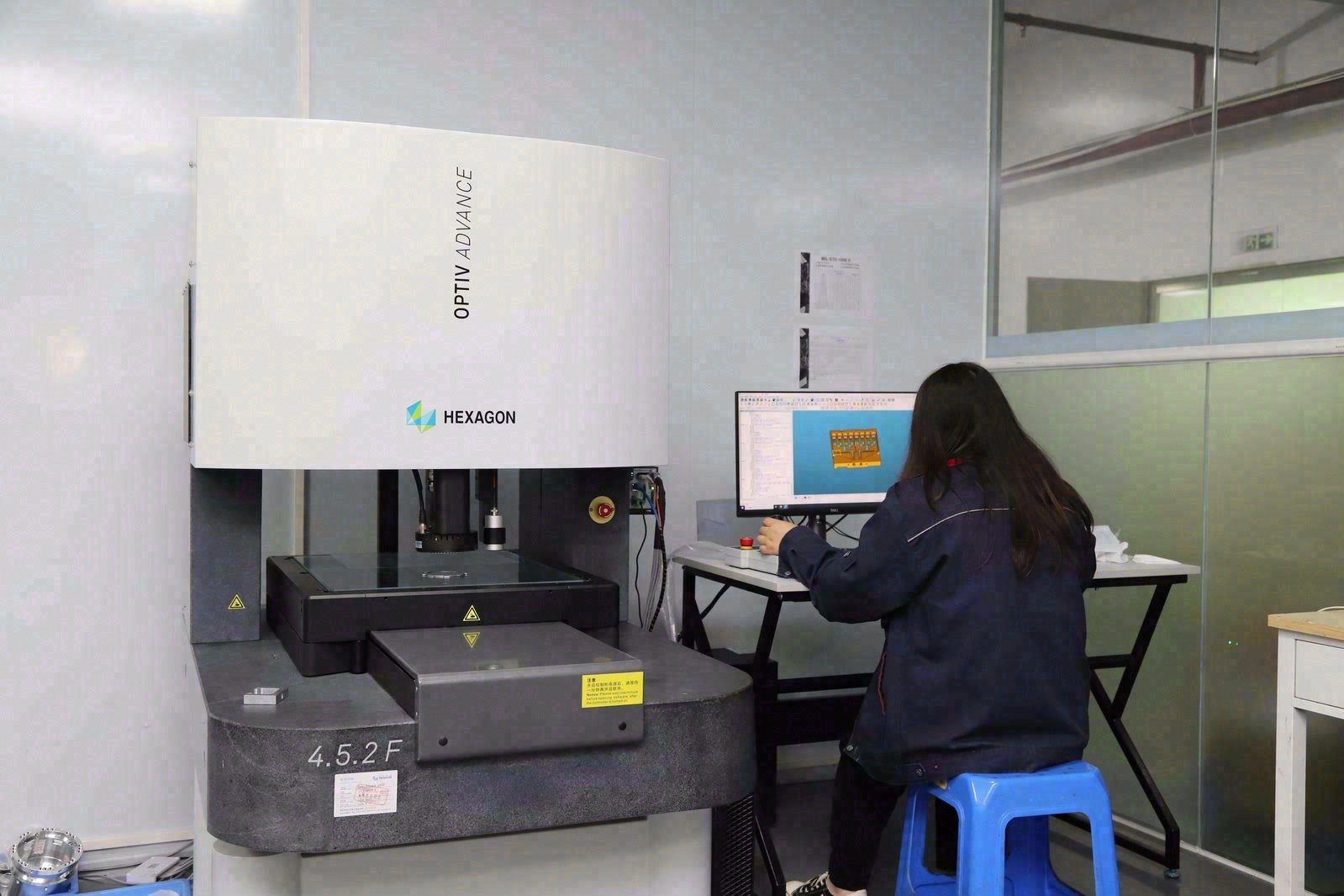
Precision claims are the easiest thing to fake and the easiest thing to check. On the site, find the tolerance the supplier states for each process and the instrument that verifies it. A credible page ties them together: milling and turning at ±0.003 mm, precision grinding at ±0.002 mm, and critical dimensions verified on CMMs rather than trusted to a caliper. The same discipline should appear on the finish side — anodizing on aluminum, passivation on stainless, plating on steel and copper — because on a custom part the finish is part of the material decision, not an afterthought.
Then look for the proof layer behind the numbers. A site that names its inspection instruments — coordinate measuring machines, an XRF spectrometer for incoming material, surface and profile instruments — is describing a measurement floor. A site that names process capability targets, such as Cpk of 1.67 on key characteristics, is describing statistical control. When those appear together with the certificate numbers — ISO 9001, IATF 16949 (product design excluded), ISO 14001, each carrying a verifiable identifier — the tolerance claim has a paper trail you can actually check with the registrar.
How do you verify a finish and heat-treatment claim before you send the drawing?
On a custom part, the finish is not decoration; it is a functional decision that changes the part's size, corrosion behavior, and schedule. Anodizing on aluminum grows a layer that can tighten a bore or thread machined to final size; passivation on stainless restores the oxide layer that machining disturbs; plating on steel and copper adds measurable thickness. A supplier's site should treat finishes the same way it treats materials — naming what it does in-house, what it bundles, and which process each material actually needs. A custom shop that recommends anodize class, plating thickness, or passivation before you ask is doing the material conversation a supplier is supposed to do.
Heat treatment deserves the same scrutiny, because it is where custom parts most often leave the floor. Ask what the site says about its heat-treatment capability: which processes run in-house and which go to qualified partners, and at what temperature the line stops. The honest answer is usually a split — common treatments in-house, specialty work such as titanium stress relief with a named partner — and that split is a scheduling fact you should know before the drawing arrives. A page that is vague about finishing and heat treatment is a page that will be vague in the quote, and on a custom part vagueness here becomes rework later.
Which quality-system signals can you verify from a browser, and which need a call?
The browser settles some quality questions completely and others only partially. You can verify from the site: the certificate numbers and scopes (checked with the registrar), the inspection instruments named on the floor, the process capability targets stated, and the documentation that ships with parts — CMM reports, material certificates, and conformity documents. Those are claims with a paper trail you can pull before you ever call.
What the browser cannot settle is how the system runs day to day. Whether incoming material is actually XRF-checked against the mill certificate on every lot, whether the calibration schedule is real, whether a first article is measured against every critical callout before the batch runs — those are questions for a phone call or a first order. The screen tells you which suppliers are worth the call; the call tells you which of those talk like the floor actually runs. A supplier that answers the verification questions with specific instruments and document names is describing its process. One that answers with adjectives is describing its hopes.
Which red flags should end the screen on the spot?
Some findings do not deserve a follow-up email; they end the screen. The list is short because each item is decisive:
- No legal entity and no registration number. If the site does not say which company you are dealing with, nothing else on the page is worth your time.
- A material list that contradicts the machine list. A "full material range" claim with machines that cannot hold the tolerances those materials demand is an inconsistency that will surface in your parts.
- Certificates as logos only, with no numbers and no scope. A certificate without a number cannot be checked, and a scope you cannot read can be claimed to cover anything.
- No named contact. A form-only site for custom work means every material and finish question will round-trip through a queue.
- Precision claims with no verification evidence. A tolerance stated without the instrument that measures it is a number, not a capability.
The pattern behind all of them is opacity in the place where your order will fail. A supplier that is open about entity, materials, processes, and evidence is confident the screen will pass; one that hides them is betting you will not look.
How do you turn the survivors into a shortlist worth a drawing?
By the thirty-minute mark you should have two or three suppliers who pass the screen, and the test for them is different: not "can they make parts" but "can they make this part." Send each one the same complete package — the drawing with material and finish called out, the quantity, and your target tolerance — and compare the responses on three axes. First, does the reply engage with the material-and-finish choice, or just repeat the quote? On a custom part, a supplier that questions the material, the anodize class, or the tolerance before pricing is doing the job a custom shop is supposed to do. Second, does the reply name the process routing and the verification it will ship? Third, is the quoted date and price consistent with what the screen showed?
A useful way to compare the survivors is a three-column sheet, one per supplier, with the same rows: material grades confirmed, process routing named, tolerance and the instrument that measures it, finish options and their effect on size, in-house versus partnered heat treatment, documentation that ships, and the response time to your RFQ. The sheet turns three conversations into one comparison, and it keeps the screen honest — a supplier that looked strong in the browser but answers the RFQ in vague terms falls out on the sheet, not on a feeling. The supplier that wins the sheet is the one whose answers line up with the evidence you found in the first thirty minutes.
The supplier that passes both the screen and the RFQ test — one that names its entity, runs your material, holds your tolerance with evidence, and talks about the finish like an engineer — is the one worth a first article. The custom machining parts material guide walks through how the material-process-finish chain shapes a part before it is quoted, and the quality system guide shows the measurement and capability evidence a serious supplier ships with the parts.
Frequently Asked Questions
What should I look at first when screening a custom parts supplier online?
Start with the legal entity — the company name, registration number, and address behind the brand. Confirm it resolves in the official registry and appears on the certificates and quality documents, then move to materials and processes.
How do I check a material claim from a browser?
Look for a named grade list — 6061 and 7075, 303 and 316 — rather than "all metals." A supplier that names specific grades is describing real capability, and the material range determines whether your custom part can be quoted at all.
What tolerance evidence should a supplier's site show?
The tolerance for each process and the instrument that verifies it: milling and turning at ±0.003 mm, precision grinding at ±0.002 mm, with critical dimensions measured on CMMs. Capability targets such as Cpk of 1.67 on key characteristics add the statistical layer.
What are the biggest red flags when screening a machining supplier?
No legal entity or registration number, a material list that contradicts the machine list, certificates without numbers or scope, no named contact, and precision claims without verification evidence. Any one of these is a reason to end the screen.
Is a short online screen enough to choose a supplier?
No — the screen is the first filter, not the decision. It eliminates suppliers who cannot make your part and produces a shortlist worth a drawing. The decision comes after the RFQ response, the first article, and the verification evidence.
What should the winning supplier prove before the order?
That it runs your material with a named process routing, holds your tolerance with measurement evidence, can discuss the finish like an engineer, and issues the invoice from the same entity that owns the machines and the certificates.
Want to see what a screen-proof supplier page looks like from the inside?
Write to [email protected] or call +86 13126536955. You will get the registration facts, the material list, the process limits, and the certificate numbers — everything a 30-minute screen should find, in one place.