
China Custom Machining Parts Sourcing: What to Verify Before You Pay
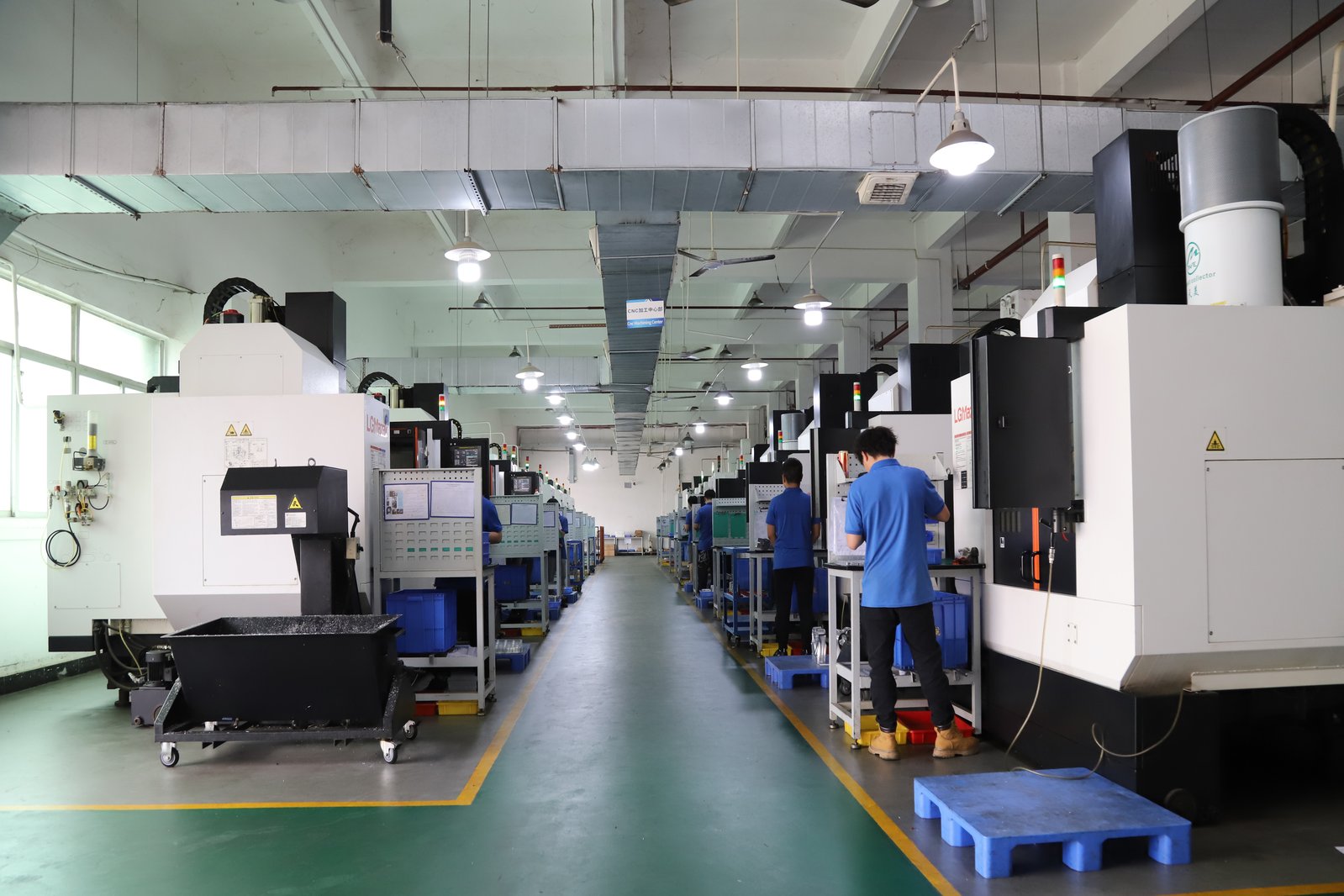
Buying custom machined parts from China is not a question of whether the factory can machine your part — most can — but of whether the material, the process, and the verification behind your order line up before your money leaves. Every custom part is a chain of claims: the alloy on the drawing, the process that cuts it, the tolerance it holds, the finish applied, the batch it ships in. Each claim is cheap to make and expensive to discover late, and the payment schedule is the one lever you still hold while the evidence is being produced. This guide is about what to verify before each payment milestone on a China custom-machining order — the material certificate before the deposit, the process evidence before the middle payment, the measurement and batch records before the balance — so the parts that arrive are the parts you paid for, and the evidence trail is complete while rework is still cheap.
Why is your first payment always ahead of the first proof?
Every overseas custom-machining order starts with the same imbalance: the supplier wants a deposit before it buys material and books machine time, and you want proof before you send money. The imbalance is structural — material and setup cost real money before any part exists — but it is manageable if the deposit is tied to the first piece of evidence rather than to trust. The verification that should sit behind your first payment is material verification: proof that the alloy on your drawing is the alloy the supplier is about to cut.
The reason material verification comes first is that nothing downstream can recover a wrong alloy. A dimensional report cannot see a substituted grade; a batch of beautifully machined parts cut from the wrong material passes every measurement and fails only in service. On a custom part — where the material was chosen for a specific function, load, or environment — a substituted alloy is not a minor deviation; it is a different product wearing your part number. That is why the first verification gate is not a capability question but an identity question: can the supplier prove, before cutting, that the material on the floor matches the material on the drawing?
What do you check before you wire the deposit?
Before the first payment, the checks belong to the material and the commercial frame around it. Three verifications close the gap between the drawing and the money:
- The material certificate matches the lot. Ask for the mill certificate for the specific lot the supplier will cut, and confirm the grade and condition match the drawing — 6061-T6, not "aluminum"; 304, not "stainless." The certificate's lot number is what ties the alloy on paper to the alloy in the bar.
- Incoming verification is a stated process, not a hope. The factory behind this site XRF-checks every incoming lot against its mill certificate before any bar is cut — a spectrometer confirms the alloy identity at the receiving dock. Ask which instrument the supplier uses and whether the verification record will ship with the batch. A wrong alloy looks identical to the right one; only an instrument sees the difference.
- The commercial terms are written, not assumed. Name the Incoterm — EXW, FOB, CIF, or DAP — so the quote and the shipment scope are the same thing, and confirm what ships with the parts: material certificates, dimensional reports, and the inspection records the order promises.
One further material check belongs before the deposit: the condition, not just the grade. A drawing that names 6061-T6 or 304 has specified the alloy, but a material's metallurgical state — annealed, cold-worked, aged to a named range — decides how it machines and how it behaves in service. On a custom part the condition is part of the specification, and the mill certificate should state it. If the drawing expects a particular condition and the certificate shows another, the part will not perform as the design assumes no matter how precisely it is machined. The certificate check therefore reads two lines, not one: the grade matches, and the condition matches.
The commercial frame matters just as much as the metallurgy. Before any money moves, confirm the entity you are paying — the legal company on the invoice, its registration, and its address — and confirm the payment terms in writing. A custom-machining order placed with a named, verifiable manufacturer is an order with a counterparty; one placed with a desk that forwards files is an order with a forwarding address. This factory operates under Dongguan Zhuohang Ltd, with its registration and facility facts published — the kind of transparency that makes the material and payment checks meaningful rather than theatrical.
Which process evidence should gate the middle of the order?
Once the material gate clears and machining begins, the middle of the order is where the process evidence should arrive. This is the stage where the drawing becomes parts, and the verification worth holding is that the parts are being made the way the quote assumed:
- Which process is actually running, and in-house or out? A custom part may need milling, turning, grinding, or a combination. Confirm the routing — which machine class cuts which feature — and whether the processes that matter run in-house or through a partner. The factory behind this site runs the core processes in-house (milling, turning, mill-turn, grinding) with secondary operations bundled, which means the process chain is visible rather than scattered across vendors.
- In-process measurement is happening, not assumed. A shop that measures critical dimensions during machining catches drift before a batch is scrap. Ask what is measured in-process and what waits for final inspection — the answer separates a floor that controls the process from one that sorts the output.
- Process capability is tracked on the real job. Cpk on key characteristics — at this factory, Ppk ≥ 1.67 at the initial study on key characteristics and ≥ 1.33 on general ones — is the number that says the process stays in tolerance across the run, not just on the first article. Ask for the control evidence from your order, not a template from another job.
The middle-payment milestone is the natural point to hold this evidence, because it is the last moment before the balance of the work is committed. If the process evidence is missing or thin, the remaining payments are the pressure that brings it out, and the supplier knows it.
What should the measurement and finish records prove before the final payment?
Before the balance is paid, the verification should close on the finished part: the tolerances, the surface, and the finishing steps the drawing promised. The record set to require runs like this:
- A first-article inspection report on the actual drawing revision. The first production part is measured against every callout, and the report names the revision, the inspector, the date, and the measurement temperature. A report that cannot be tied to your drawing revision has not verified your part.
- CMM results on the critical features. This factory verifies ±0.003 mm milling-and-turning tolerances and ±0.002 mm grinding on Hexagon CMMs. Ask which features were measured, with which instrument, and what the measured values were, not just a pass/fail stamp.
- Surface-finish and treatment records. If the part is anodized, passivated, electropolished, or heat-treated, the record should show the step ran and on which batch. Finishing is where a silent process change becomes a new part wearing an old number, so the record matters as much as the part.
- Batch traceability to the material. The finished parts should trace back to the lot whose certificate you saw before the deposit — the same bar, the same verification, the same batch record. That continuity is what makes the whole evidence chain coherent.
Each of these records answers a claim the drawing made, and each should exist before the final payment rather than after. A supplier that ships the records with the parts has priced the evidence into the process; one that offers to send them later has left the proof to be negotiated after the money is gone.
What do you check when the parts arrive, and what do you do if a claim does not hold?
The arrival check is the last gate, and it should be pre-agreed rather than improvised. Confirm the revision is the one you ordered, tie the material certificate to the batch on your dock, spot-check the critical dimensions against the reports, verify the finishing records match the parts, and count the batch. Each step answers a question the order asked, and each answer is a document rather than a person's assurance.
When something does not match, the response should follow the path the order defined. Reject with evidence, within the acceptance window the order states, and name the remedy — rework, replacement, or a corrected document set. The factory's own quality control process explains how parts are verified before they ship and what documentation accompanies them, and the factory page shows the equipment and the verification instruments behind the claims. On a China order, the acceptance window and the rejection path are not legal boilerplate; they are the mechanism that makes the supplier's promise enforceable from a distance.
How much verification does your order value justify?
The honest answer is that verification should scale with the cost of being wrong, and the cost of being wrong on a custom machined part is not the part price — it is the program it feeds. A one-off bracket for a lab fixture justifies a different evidence set than a component going into a production line or a regulated product. The verification ladder runs from light to heavy:
- Light: material certificate plus first-article report. Enough for a low-risk prototype where a bad part costs a day, not a program.
- Medium: adds XRF verification, CMM results on critical features, and process-capability evidence. Right for production components where a tolerance failure means rework or a line stop.
- Heavy: adds full batch traceability, SPC across the run, PPAP-style documentation, and third-party inspection where the application demands it. For automotive, medical, and aerospace work where the evidence follows the part for years.
Name the tier in the RFQ so the quote includes the cost of the evidence and the supplier builds it into the process. The custom machining parts material guide on this site walks the material-selection chain that this sourcing guide protects — choose the material and finish first, then verify that the order delivers exactly that chain from deposit to delivery.
Which payment structure makes verification a condition of payment?
The payment schedule is the enforcement mechanism for everything above, and it works only if the milestones are tied to evidence rather than to time. A structure that holds the money against the evidence looks like this: the deposit releases against the lot-matched material certificate and the confirmation of incoming verification; the middle payment releases against process evidence — routing confirmation and in-process measurement records; the balance releases against the first-article report, CMM results, finish and treatment records, and batch traceability. Each milestone asks: what evidence do I have that this stage of the order is real?
Two commercial habits make the structure hold. First, put the evidence requirements in the purchase order, not in a side conversation — a supplier that knows the records are a condition of payment produces them as part of the process. Second, hold a genuine balance — enough that the final evidence set is worth producing — and release it only when the records arrive with the parts. On a China custom-machining order, the payment schedule is not a financial detail; it is the verification plan with the money attached. If the supplier's own process produces the evidence anyway — as it does here, where XRF verification, CMM inspection, and batch traceability are standard practice — then gating payment on it costs nothing and protects everything.
Frequently Asked Questions
How much deposit is normal for a China custom-machining order?
There is no honest flat percentage — the deposit should cover the material and committed setup, and it should release against the lot-matched material certificate and confirmation of incoming verification. The number matters less than the linkage: the deposit buys the material evidence, and the evidence should arrive before or with the payment, not after it.
Why does the material certificate matter if the parts will be measured anyway?
Because measurement cannot see a substituted alloy. A part cut from the wrong grade passes every dimensional check and fails only in service — corroding, for example, where the specified material would not. The material certificate ties the lot that was cut to the XRF verification done at receiving, so the alloy on the drawing is the alloy in the part.
What is XRF verification, and why should I ask for it?
XRF (X-ray fluorescence) is a spectrometer check that confirms the alloy identity of a metal sample in seconds. This factory XRF-checks every incoming lot against its mill certificate before any bar is cut, so the right alloy is guaranteed rather than assumed. Ask which instrument the supplier uses and whether the record will ship with the batch.
Do I need a full audit before my first China order?
Not for a first small order. The evidence-based payment structure — material certificate before the deposit, process records before the middle payment, measurement and batch records before the balance — is the lightweight version of the same audit, applied to your actual order. Save the deep audit for the supplier that clears the evidence gates.
What tolerances should a China machining supplier hold on custom parts?
±0.003 mm on critical milled and turned features, verified on CMMs, with ±0.002 mm on precision-ground surfaces such as bearing seats and seal faces. These are production tolerances held to process capability — Cpk at 1.67 or higher on key characteristics — not best-case claims.
What if the parts arrive and the tolerance does not hold?
Follow the pre-agreed path: reject with evidence within the acceptance window the order defines, and name the remedy — rework, replacement, or a corrected document set. The acceptance window and rejection path are what make a supplier's promise enforceable from a distance, so they belong in the order before the parts ship.
Should I use a third-party inspection company in China?
For high-value or regulated orders, yes — an independent inspection at the factory before shipment adds a layer the supplier's own records cannot. For standard orders, the evidence set described above — material certificate, first-article report, CMM results, finish records, batch traceability — provides the same verification at a fraction of the cost, if the payment structure makes the records a condition of payment.
Need a China custom-machining order structured so every payment buys verifiable evidence?
Send the drawing and your program stage to [email protected] or call +86 13126536955. You will get a quote that names the evidence at each milestone — material certificate, process records, and measurement reports — so the parts that arrive match the money you sent.