
Aluminum vs Stainless for Custom Machined Parts: A Decision Table for a One-Off You May Scale
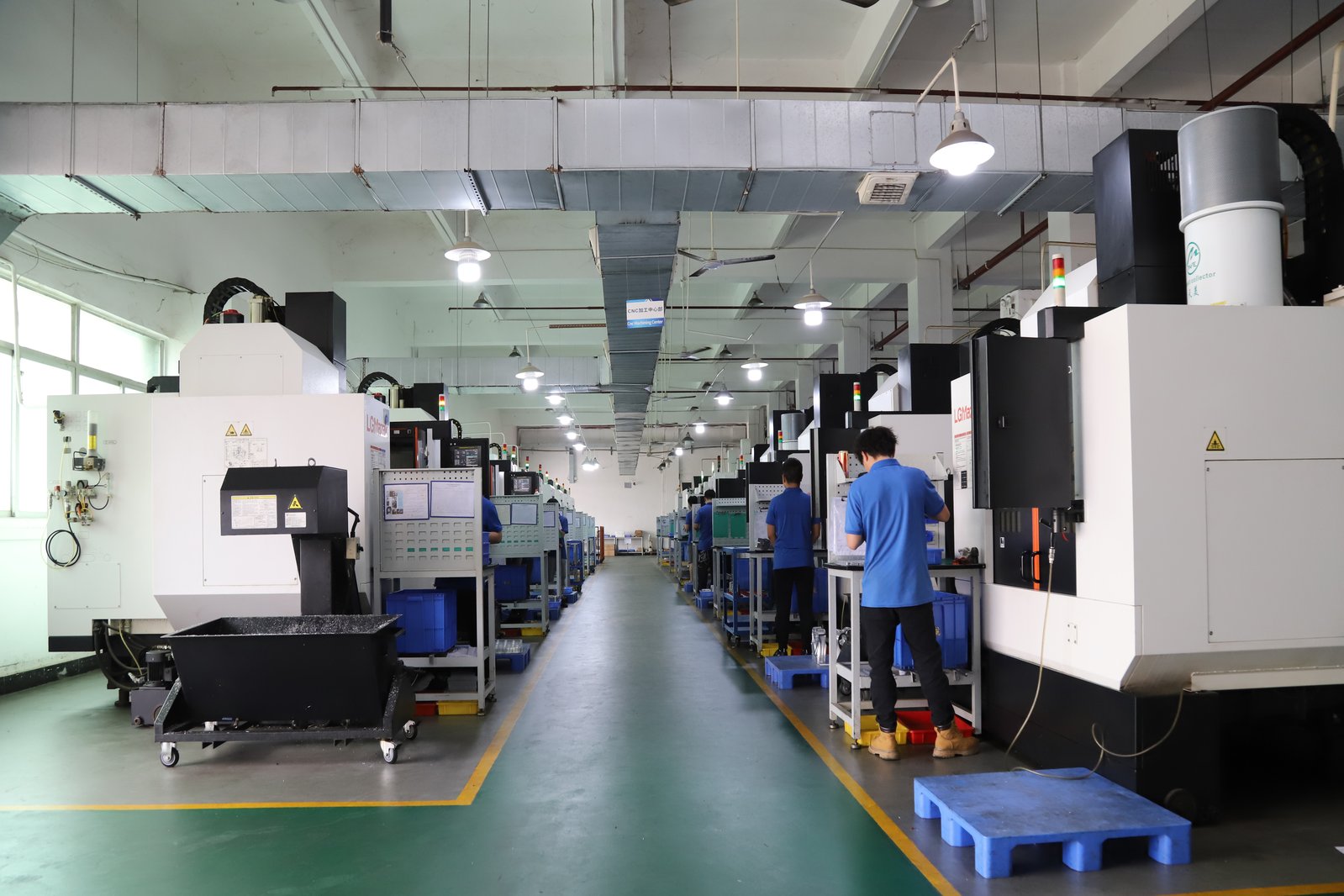
A custom machined part starts as a drawing and nothing else — no catalog inventory, no established process, no prior run to copy. That is why the material line on the drawing does more work on a custom part than on any standard one: it decides the process route, the finish chain, the lead time, and the verification your part will carry. When the choice narrows to aluminum or stainless, buyers usually reach for price, and aluminum wins that argument easily. But a custom part is rarely a one-off for its own sake — it is usually a prototype or a first article for something that will scale — so the material has to hold up in service, not just on the quote. This guide runs the aluminum-versus-stainless decision the way a custom-parts buyer should: what each metal gives the design, what it does to the route through a machine shop, and a decision table to run before the drawing leaves your desk.
Why does a custom part make the material choice heavier than a standard part would?
A standard part inherits its material from a catalog and a history: someone already chose it, tested it, and proved the process. A custom part has no such inheritance. The material you write on the drawing is the first decision in a chain that runs through machining, finishing, and inspection, and every later step is downstream of it. Change the material after the first article and you re-run the chain — new cutting parameters, new finish compatibility, new verification — which is why the material choice on a custom part deserves the same deliberation as the geometry itself.
The second reason the choice is heavier is that a custom part is often the seed of a production part. The one-off bracket you order this week to validate a design is the same geometry that will come back as a hundred or a thousand pieces if the design works. Prototype it in a material that cannot survive the intended service, and the validation tells you nothing about the part you will actually build. Prototype it in the production grade, and the first article is the first evidence for the real thing. That is the lens this guide uses: aluminum and stainless are not two ways to make the same one-off, but two answers to what the part will do after it leaves the shop.
What does aluminum actually give a custom machined part, and when is it the wrong pick?
Aluminum is the default for a reason, and on custom work the reason compounds. It machines fast, which keeps both the price and the lead time short on a one-off. It is light — roughly a third of the weight of steel — which matters on parts that move or are carried. It anodizes well, which gives a custom part a finished, colored surface without a plating step. And it is inexpensive enough that iterating the design across a few prototype rounds is cheap. For a housing, a bracket, a heatsink, or a structural piece where weight matters more than ultimate strength, aluminum is almost always the first material to try.
The grades change the behavior more than buyers expect. The 6061 grade is the general-purpose workhorse — machinable, weldable, predictable — and the right call for most housings and brackets. The 7075 grade is stronger and the choice when an aluminum part has to carry real load, at the cost of being a little less forgiving to finish. Aluminum becomes the wrong pick when the part faces sustained wear, high heat, or corrosive chemicals. Anodizing helps, but it is a thin oxide layer, not a substitute for a material that is inherently corrosion-resistant. If the part rubs against a mating component or sits in an aggressive environment, aluminum is asking to do a job it was not built for, and the custom part will carry that limitation into every later copy.
When does stainless earn its higher cost and longer lead time on a custom part?
Stainless costs more and machines slower than aluminum, so on a one-off it has to earn the premium in the part's future, not its price. It earns it when the part lives in moisture, washdown, or chemical exposure, or when hygiene and cleanability matter — food-contact fittings, medical instrument parts, marine hardware. The reason is where the corrosion resistance lives. In stainless, it is in the alloy itself: the chromium forms a self-healing oxide layer, so the protection is intrinsic rather than applied. A plated part that gets scratched becomes a corrosion site at the scratch; a stainless part does not have that failure mode.
The grade inside "stainless" changes both machining and corrosion. The 303 grade is free-machining, which is why it shows up in threaded fittings and small turned parts that need stainless properties without the cutting fight. The 304 grade is the general-purpose austenitic choice for food equipment and structural parts. The 316 grade adds molybdenum, the element that stands up to chlorides — the reason marine hardware, chemical-duty parts, and washdown equipment are drawn in 316 rather than 304. On a custom part destined for one of those environments, the stainless premium buys the difference between a part that survives and a part that corrodes, and no anodized aluminum reproduces it.
How does the material choice change the route a custom part takes through the shop?
The material written on the drawing determines which machines, which feeds, and which finish steps the part touches, and on custom work that route is written fresh each time. Aluminum cuts fast on whatever process the geometry needs — milling for prismatic parts, turning for round ones — and the surface finish chain is short: an as-machined surface at around Ra 3.2 µm for general faces, an anodize step if color or wear resistance is wanted. The result is a short route and a lead time near the fast end of the shop's tiers.
Stainless lengthens the route on two fronts. It machines slower, which stretches the cutting time, and it needs a different finishing discipline — usually a mechanical polish or a passivation step rather than a coating, because the corrosion resistance already sits in the alloy. The slower cutting and the extra finishing step push a stainless custom part toward a longer lead time than the same geometry in aluminum. That is not the shop being slow; it is the material demanding more spindle time and a finish chain that respects its chemistry. A buyer who plans around that difference — rather than discovering it when the quote arrives — keeps the custom part on schedule.
Which custom parts end up needing the verification the two metals demand differently?
Every custom part ships with some form of proof, but the two metals shift where the proof has to be strongest. On aluminum, the risk that hides is the grade and the temper: the common alloys look alike, and a 7075 part that arrives as 6061 — or a T6 part that arrives annealed — fails differently in service without ever failing inspection. On stainless, the risk that hides is the grade substitution: 304 and 316 are visually identical, and only the molybdenum in 316 resists chlorides, so a part ordered in 316 and supplied in 304 pits exactly where the drawing was trying to protect it — the verification gap the quality page closes with incoming lot checks.
The verification that closes both gaps is one receiving step run on every lot: bars scanned on an XRF spectrometer and matched to their mill certificates before stock reaches the machines. That single check flags a mixed lot or a substituted grade at the door, where it is cheap to catch, instead of in the field after the custom part has been installed. On your side of the chain, the same discipline applies: state the grade on the RFQ — 6061-T6 or 7075-T6 on aluminum, 304 or 316 on stainless — and ask for the mill certificate with the XRF confirmation. A drawing that says only "aluminum" or "stainless" leaves the decision that matters most to the shop's guess, and on a custom part there is no production history to catch the error later.
Which material gets the order — a decision table for a custom part that may scale?
Run the table one row at a time, and let the row your part cannot compromise pick the metal. The last column is where the route through the shop and the proof it carries get written into the order.
| If your custom part's dominant requirement is… | The material that wins | What it means for the route and the order |
|---|---|---|
| Light weight on a part that moves or is carried | Aluminum (high-strength grade if it also carries load) | Roughly a third of steel's weight; fast cutting keeps the lead time short |
| Low cost and fast iteration while the design is still moving | Aluminum 6061 | Cheap to machine and to re-cut across prototype rounds; anodizing adds a short finish step |
| Survival in moisture, washdown, or chemicals with no coating | Stainless 316 | Corrosion resistance lives in the alloy; passivation keeps the finish chain short |
| Food-contact or medical cleaning duty | Stainless 304 or 316 | No coating to chip or omit; state the surface finish and passivation on the drawing |
| Strength and stiffness under repeated load | Stainless, or high-strength aluminum | Stainless is roughly three times as stiff; if mass matters more, 7075 carries more strength per kilogram |
| A colored, finished surface without plating | Aluminum with anodizing | Anodize offers a color range stainless cannot match; allow for the layer on tight fits |
| Certainty that the shipped grade is the ordered grade | Either — proven by XRF | Name the grade on the RFQ and require the mill certificate with the XRF confirmation |
| A prototype that must validate a production part | The production grade, whatever it is | Prototype in the material that will fly; a substitute validates geometry but lies about service behavior |
When requirements conflict — light and corrosion-resistant and strong and cheap — no single row wins, and the custom part needs a trade-off conversation rather than a material pick. That conversation is what the material-and-finish review is for, and a shop that reads the duty before quoting will tell you which requirement to protect and which to relax, following the selection logic the main custom-machined-parts guide lays out family by family. The material that survives the review is the one that belongs on the drawing, because on a custom part, the drawing is the seed of everything that follows.
Frequently Asked Questions
Which is cheaper for a custom machined part — aluminum or stainless?
Aluminum. It machines fast, which keeps both the price and the lead time short on a one-off, and it is among the least expensive metals to cut. Stainless carries a higher price per kilogram and takes longer to cut, so the identical custom geometry quotes above the aluminum version and ships later. What the premium purchases is corrosion resistance that aluminum can only approach by adding a coating.
Can a custom stainless part hold the same tolerance as aluminum?
Yes. Both metals hold the same tolerance bands on a capable floor — ±0.003 mm on milled and turned features, ±0.002 mm on precision-ground surfaces, with key characteristics at Ppk ≥ 1.67 initial. The difference is not the band; it is that stainless machines slower, so the route through the shop is longer.
Should I prototype my part in aluminum even if production will be stainless?
Only for geometry. If the prototype exists to validate fit and form, aluminum is a fast, cheap stand-in. If it exists to validate the part's behavior in service — corrosion, wear, stiffness — prototype in the production grade, because a substitute validates the shape but lies about the material's performance.
When is 316 the right callout instead of 304?
When the part will face chlorides — seawater, process chemicals, or caustic cleaning compounds. Molybdenum is the element that stands up to them, and it lives in 316, not 304. The grades are indistinguishable to the eye, so the RFQ should name 316 and the incoming check should confirm it by XRF against the mill certificate.
Does anodizing change the size of a custom aluminum part?
Yes. Anodizing grows the surface outward by a few micrometers, enough to change a precision fit. State whether the critical size is measured before or after anodizing, and tell the shop the finish is coming so the machinist leaves the allowance for the layer.
Which material suits an outdoor or salt-air custom part?
Stainless 316 is the reliable answer, because its chloride resistance comes from the alloy rather than from a surface film that can be scratched off or left off. Unprotected aluminum pits under steady salt contact, and anodizing only stretches that limit rather than removing it in heavy marine duty. Choose 316 and put passivation on the drawing.
Which quality systems back the material and tolerance claims on custom parts?
The shop operates under ISO 9001:2015 (certificate 116024/A/0001/UK/En), IATF 16949:2016 (product design excluded) (131941/A/0001/SM/En), and ISO 14001:2015 (116024/B/0001/UK/En), and verifies incoming material by XRF against the mill certificate before stock reaches the machines. The material record and the CMM report ship with the parts.
Choosing between aluminum and stainless for a custom part, and not sure which route to take?
Send the drawing with the duty described — environment, load, mass limits, finish needs, and whether the part will scale — to [email protected] or call +86 13126536955. You will get a material recommendation with the process route, the finish chain, and the lead time for each metal, so the grade on the RFQ is a decision you made, not a guess the shop made for you.